Judul : South Korea Needs 5G SA to Lead 6G
link : South Korea Needs 5G SA to Lead 6G
South Korea Needs 5G SA to Lead 6G
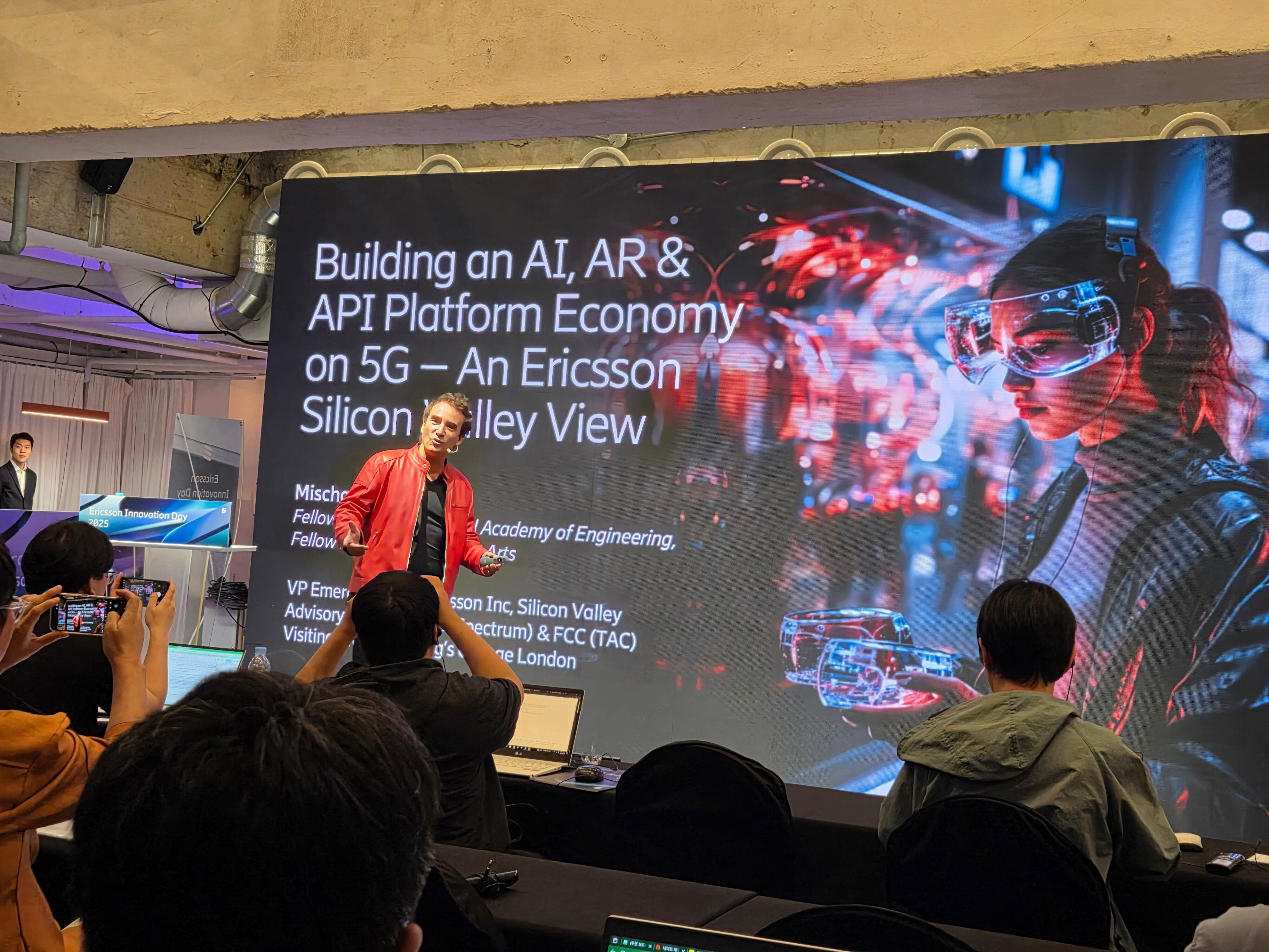
“South Korea urgently needs to invest in 5G standalone (SA) infrastructure to prepare for the spread of next-generation services such as artificial intelligence (AI), extended reality (XR), and autonomous driving, which require high reliability and ultra-high bandwidth. This is also essential for transitioning to 6G.”
Mischa Dohler, Ericsson’s vice president in charge of new technologies, stated this at the ‘Ericsson Innovation Day 2025’ held in Itaewon, Seoul, on the 22nd.
Dohler emphasized, “Given South Korea’s world-class 5G penetration rate and government-led 6G R&D capabilities, transitioning to 5G SA will be a critical foundation for securing leadership in the global 6G competition.”
Currently, South Korea’s 5G network operates in a non-standalone (NSA) format, relying on 4G LTE networks to deliver 5G services, making an immediate shift to 6G difficult. Ericsson argues that South Korea must establish a 5G SA network—composed solely of 5G infrastructure—to lead the 6G transition. Even with 6G, networks will initially operate in an NSA format based on 5G SA. A 5G SA network can fully leverage core 5G features like low latency and network slicing, a technology that divides a single physical network into multiple virtual networks. This enables new services such as ultra-high-speed data transmission, holographic communication, and AI integration.
On the same day, Ericsson pointed out structural issues hindering South Korea’s 6G transition. These include delays in 5G SA adoption, reduced capital expenditure (CAPEX) on telecom infrastructure, stagnation in technological advancement due to reliance on 5G NSA, and telecom operators’ disproportionate focus on AI investments. Dohler stated, “5G is not just a generational upgrade but a core infrastructure supporting an AI, AR, and API-based platform economy. South Korea, with its technological capabilities and institutional foundations, has sufficient potential to become a global 6G leader if it accelerates SA transition and network innovation now.”
Dohler stressed that network infrastructure investments will grow as data usage surges due to technological advancements. He noted, “Even if 20% of the global population uses AI-based smart glasses for just 10 minutes daily, global data traffic is projected to triple. Expanding network infrastructure to prepare for this is an inevitable trend.” According to Ericsson, the company invests US$5 billion annually (approximately 7 trillion Korean won) solely in network R&D.
Dohler added, “Through expanded investments, we will provide world-class products and solutions and grow as a key player in the network ecosystem.”
Ericsson also expressed strong confidence in its network security. Dohler said, “Considering security concerns, we are preparing hardware with end-to-end security features. We will enable automated security operations. In terms of software, we are discussing integrating security features from the initial equipment design phase.” The company introduced a zero-trust security framework that combines AI-based threat detection and response with hardware Root of Trust, embedded endpoint detection and response (EDR), and IMSI catcher blocking technology. Dohler stated, “This allows Ericsson to strengthen the network’s resilience while responding to advanced security threats.”
Sibel Tombaz, CEO of Ericsson Korea, said, “Ericsson aims to be a strategic partner in solving the challenges faced by South Korea’s telecom industry, based on AI-native 5G Advanced, autonomous networks, security, and energy-efficient technologies. We will be a trusted partner driving long-term industrial growth beyond short-term technology adoption.”
Thus the article South Korea Needs 5G SA to Lead 6G
You are now reading the article South Korea Needs 5G SA to Lead 6G with the link addresshttps://www.angkaraja.cfd/2025/10/south-korea-needs-5g-sa-to-lead-6g.html
0 Response to "South Korea Needs 5G SA to Lead 6G"
Post a Comment