Judul : How China’s open-source AI is helping DeepSeek, Alibaba take on Silicon Valley
link : How China’s open-source AI is helping DeepSeek, Alibaba take on Silicon Valley
How China’s open-source AI is helping DeepSeek, Alibaba take on Silicon Valley
China's free-for-all AI models, developed by firms like DeepSeek and Alibaba, present a viable alternative to US closed-source systemsJuly 9, 2024, may be remembered as a day of humiliation for China's artificial intelligence community. On that day, US start-up OpenAI, the global leader in AI model development, blocked developers in China - including Hong Kong and Macau - from using its GPT models.
In contrast, developers from countries ranging from Afghanistan to Zimbabwe were given access, reflecting OpenAI's unspoken belief that its valuable models must be safeguarded against misuse by China, along with Iran, Russia and North Korea.
Now the tide has turned. With the December 2024 launch of DeepSeek's free-for-all V3 large language model (LLM) and the January release of DeepSeek's R1, an AI reasoning model that rivals the capabilities of OpenAI's o1, the open-source movement started by Chinese firms has sent shock waves through Silicon Valley and Wall Street.
Do you have questions about the biggest topics and trends from around the world? Get the answers with SCMP Knowledge, our new platform of curated content with explainers, FAQs, analyses and infographics brought to you by our award-winning team.
The trend has not only unleashed a wave of AI applications in China, but also redefined the global AI landscape, winning the support of developers worldwide. Chinese open-source models present a viable alternative to the closed-off systems championed by US tech giants like OpenAI and Google.
Open-source AI models - whose source code and model weights are available for anyone to use, modify, and distribute - encourage a collaborative approach to AI development.
While in the past, open-source computer systems like Linux failed to replace proprietary competitors like Microsoft's Windows, analysts said that this time around, China's free-to-use AI models posed a serious challenge to US counterparts.
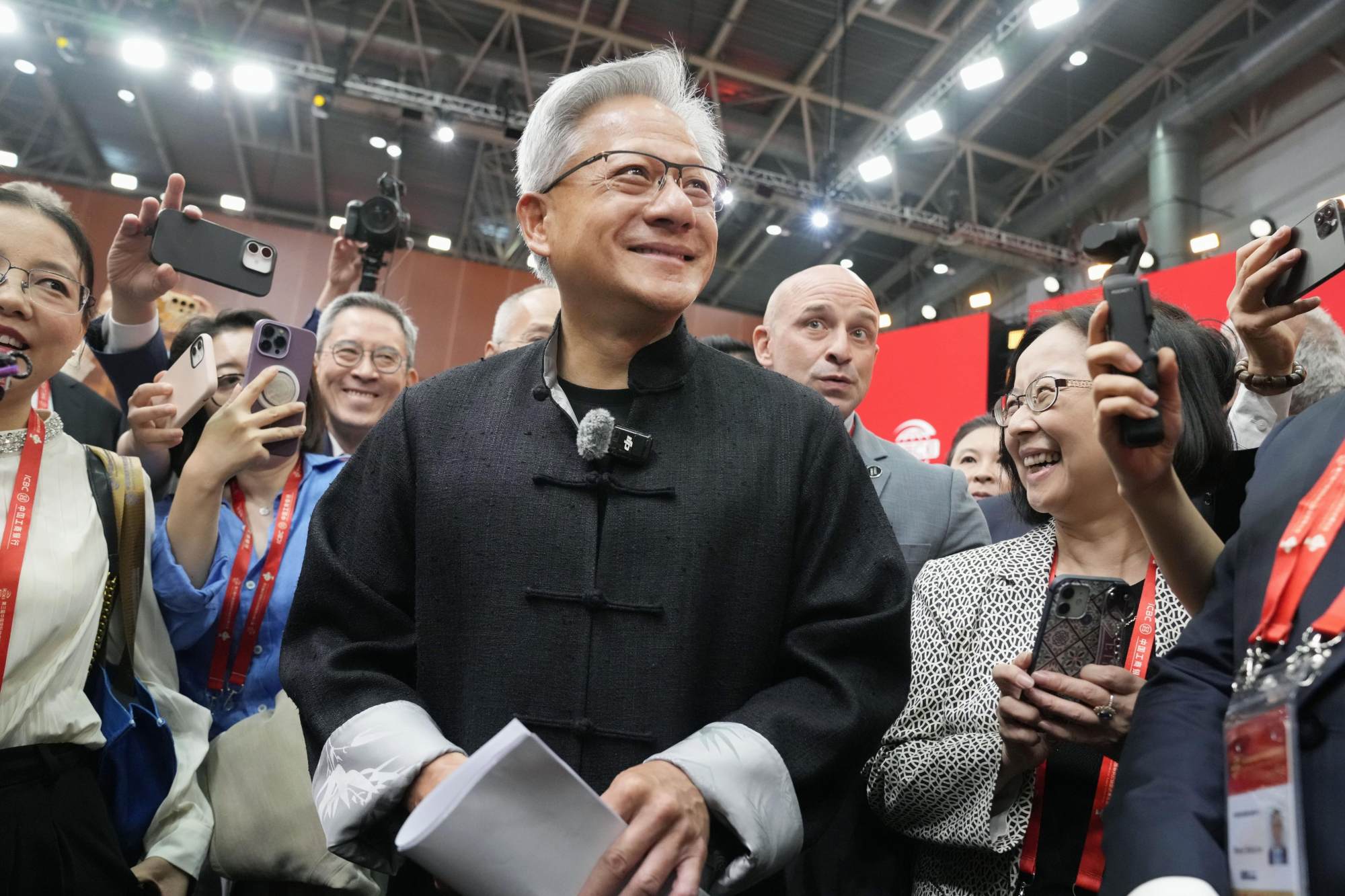
Nvidia founder and CEO Jensen Huang has praised China's progress in open-source AI and expressed a commitment to collaborate with Chinese companies, as the chipmaker prepares to resume shipments of its advanced H20 chips to one of its largest markets following a breakthrough in Sino-US trade talks late last month.
Huang described LLMs developed by Chinese firms - including DeepSeek, Alibaba Group Holding, Tencent Holdings, MiniMax and Baidu - as "world-class" and vital for global AI advancements. Alibaba owns the Post.
China's open-source AI movement served as a "catalyst for global progress", providing "every country and industry a chance to join the AI revolution", he said at the China International Supply Chain Expo in Beijing this week.
In contrast to the rapid pace at which Chinese companies are releasing their open-source models, OpenAI founder and CEO Sam Altman announced last weekend a delay to its open-source LLM that had been slated to launch in the next few days, citing safety concerns and the need for additional testing.
For Chinese start-ups like DeepSeek, adopting an open-source approach was an effective strategy for catching up, as it allowed them to leverage contributions from a broader community of developers, according to Kevin Xu, founder of tech investment firm Interconnected Capital.
Since OpenAI launched ChatGPT in November 2022, Chinese open-source AI developers have made strides in advancing their models. "Most open-source AI models from China are now at or close to frontier-level capabilities", rivalling proprietary systems from top US players, Xu said.
"The latest string of open-weight AI model releases shows the growing maturity of open-source adoption and contribution in China," he added.
DeepSeek's latest R1-0528 ranks as the highest-rated open-source model in a benchmark by AI consultancy Artificial Analysis, trailing only models from Elon Musk's xAI, OpenAI and Google. Other Chinese firms, such as Alibaba, MiniMax and Moonshot AI, also performed well in these tests.
The advanced ability of Chinese models has not gone unnoticed by users.
As of mid-July, DeepSeek held a 24 per cent share in OpenRouter, a global marketplace for AI models, making it the second-most popular model developer, just behind Google, which commanded a 37 per cent share.
Meanwhile, Alibaba's Qwen family of models has become the world's largest open-source AI ecosystem, with over 100,000 derivative models built upon it, surpassing Meta Platforms' Llama community, according to Hugging Face, the world's biggest open-source AI community.
China's extensive open-source ecosystem encompasses models ranging from 1 billion to 1 trillion parameters, with applications in sectors spanning intelligent manufacturing and digital governance, according to Zheng Xiaolong, a researcher at the State Key Laboratory of Multimodal Artificial Intelligence Systems, which is affiliated with the Chinese Academy of Sciences.
The convergence of technological evolution and industrial demand had created a unique development model in China, where application needs drove innovation and open-source ecosystems fuelled industry growth, Zheng wrote in People's Tribune, a state-backed publication.
China's open-source movement was a reflection of a trend towards "tech equality", challenging the dominance of closed-source models, he said.
One reason Alibaba opted to open-source its Qwen models was that it "democratises the usage of AI" and "proliferates applications", which would contribute to the company's cloud computing business, chairman Joe Tsai said last month.
The open-source strategy allowed Chinese firms to attract domestic and international developers, broadening their reach and adoption, said Ray Wang, research director of semiconductor, supply chain and emerging technology at consultancy Futurum Group.
Chinese home appliance manufacturers like Midea Group and Haier, for example, are integrating DeepSeek technology into their televisions and refrigerators, while US companies like Nvidia and Amazon.com offer users access to DeepSeek's models.
Liu Zhi, founder and CEO of Chinese headphone brand Oleap, said the open-source nature of DeepSeek models "allows us to directly fine-tune them or conduct additional training and distillation".
With DeepSeek's low pricing, Liu said the cost of using AI to generate meeting summaries on Oleap's smart headphones dropped over 80 per cent after it integrated an application programming interface based on DeepSeek's R1 model in February.
DeepSeek's success prompted US competitors like OpenAI to reassess their strategies, said Jimmy Hu, head of AI at Shanghai-based decentralised AI infrastructure developer Phoenix.
To stay ahead of the curve, US companies were expected to keep releasing paid models that were "competitive or marginally superior" to products from open-source rivals like DeepSeek, he added.
In China, companies that previously adhered to a closed-source approach, such as Baidu and MiniMax, were also reconsidering their game plans, according to Adina Yakefu, an AI researcher at Hugging Face.
"This collective shift towards open source among Chinese AI companies is more than symbolic; it reflects a growing consensus that open source accelerates iteration, builds trust, and expands global influence," Yakefu said.
China's vast talent pool and increasing government support also helped drive the nation's open-source momentum, said Bao Yungang, deputy head at the Chinese Academy of Sciences' Institute of Computing Technology.
China was home to 9.4 million software developers as of last year, according to official data cited by state broadcaster China Central Television.
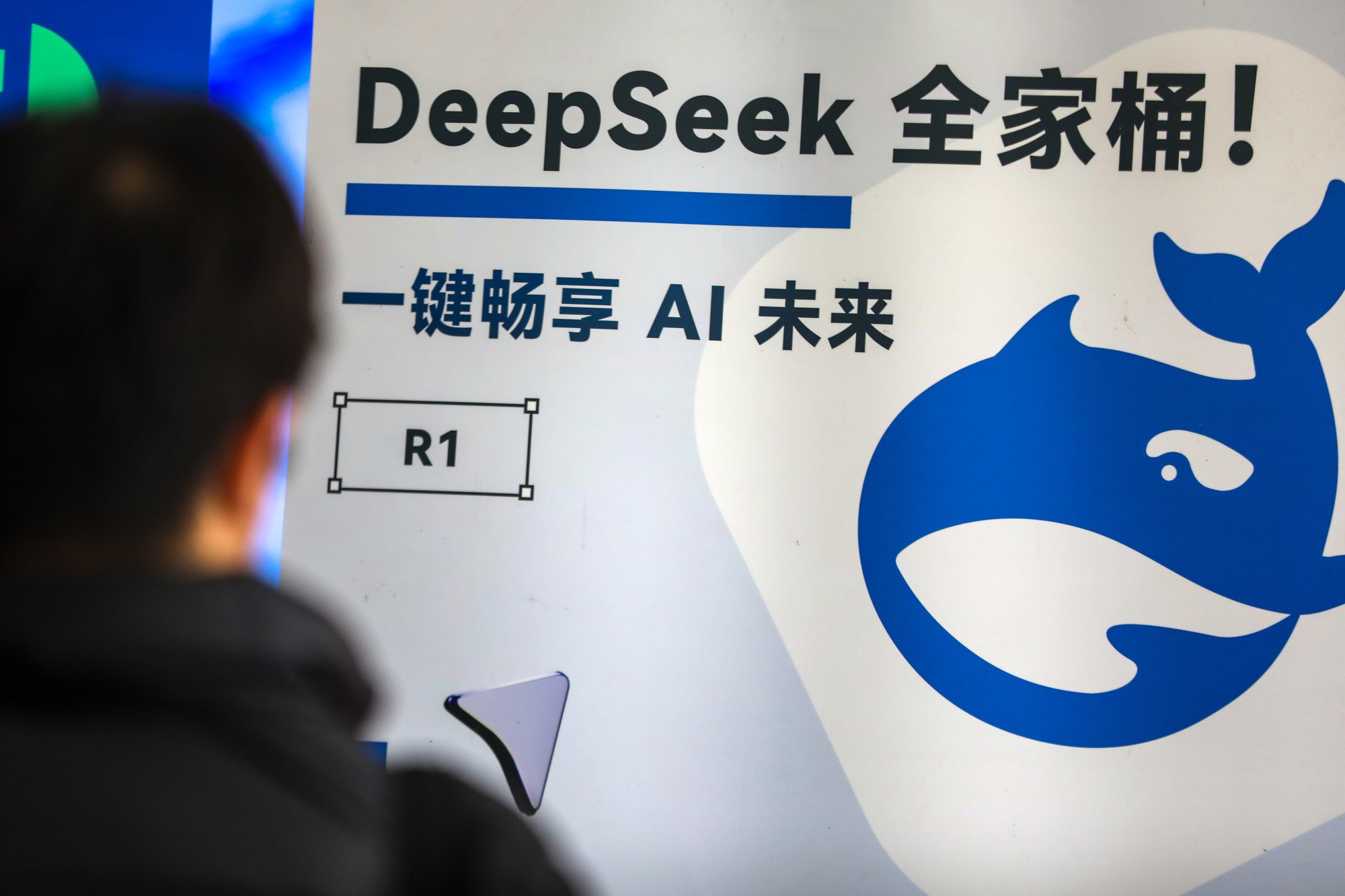
The country contributed 17 of the top 100 open-source software programs, making it the world's second-largest developer, according to a joint report from the China Communications Standards Association and Cloud Computing Standards and Open-Source Committee.
China has also integrated open source into its national strategy.
Its 14th five-year plan stressed the importance of open-source development, outlining plans to build open-source AI communities locally, export open-source innovations internationally, and build AI to collect public data.
This state-driven effort had encouraged local enterprises and educational institutions to join the movement, according to Bao.
As Chinese open-source AI models gain international popularity, Beijing's AI ambitions and the country's AI products have drawn political scrutiny, particularly from Western governments.
DeepSeek's chatbot, for example, has been banned or restricted in countries including South Korea, Australia, Germany, Italy, and the Czech Republic because of data security concerns.
Interconnected Capital's Xu said these moves were politically motivated rather than based on technical merit. "Putting a national label on open-source code or weights makes no technical sense," he said.
Others have highlighted the global benefits of having companies - regardless of their national origin - share their research and collaborate to advance AI technology.
"Don't forget that open source has many global implications," Nvidia's Huang said during his Beijing trip. "Not only did the open-source models help the Chinese ecosystem, [they are] helping ecosystems around the world."
More Articles from SCMP
Is Indonesia’s Gibran being ‘exiled’ to Papua? New assignment sparks whispers
Nvidia CEO meets China’s commerce minister to discuss AI cooperation, foreign investment
European Union sanctions 2 Chinese banks over aid to Russia
Why family feud at Wahaha is no laughing matter for China businesses
This article originally appeared on the South China Morning Post (www.scmp.com), the leading news media reporting on China and Asia.
Copyright (c) 2025. South China Morning Post Publishers Ltd. All rights reserved.
Thus the article How China’s open-source AI is helping DeepSeek, Alibaba take on Silicon Valley
You are now reading the article How China’s open-source AI is helping DeepSeek, Alibaba take on Silicon Valley with the link addresshttps://www.angkaraja.cfd/2026/04/how-chinas-open-source-ai-is-helping.html
0 Response to "How China’s open-source AI is helping DeepSeek, Alibaba take on Silicon Valley"
Post a Comment