Judul : AI Red Lines: Europe, Nobelists, Tech Demand Global Limits
link : AI Red Lines: Europe, Nobelists, Tech Demand Global Limits
AI Red Lines: Europe, Nobelists, Tech Demand Global Limits
Unveiled this Monday during the United Nations' 80th General Assembly in New York, the plan calls on governments to reach an agreement by 2026. The agreement would establish a series of "red lines" defining AI applications deemed so dangerous that they should be universally prohibited.
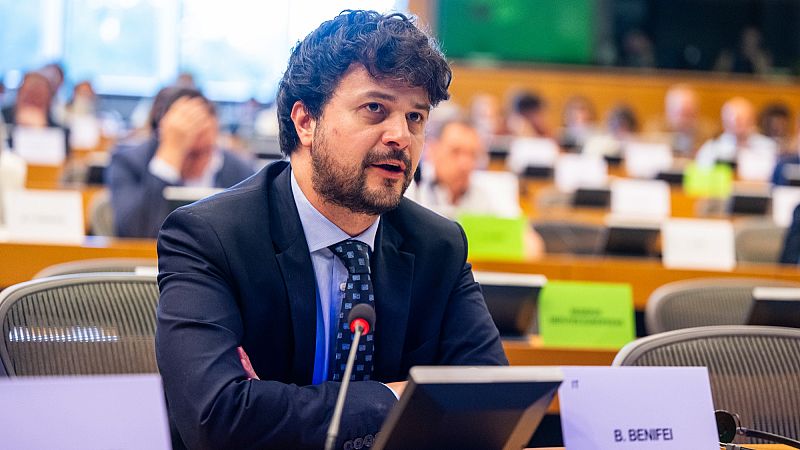
The signatories include prominent figures such as Enrico Letta, the former Italian prime minister; Mary Robinson, the former President of Ireland and current United Nations High Commissioner for Human Rights; and Members of the European Parliament Brando Benifei, an Italian socialist MEP and co-chair of the European Parliament's AI working group, and Sergey Lagodinsky (Germany/Green). Ten Nobel laureates and tech leaders, including the co-founder of OpenAI and Google’s director of engineering, also signed the document.
The signatories contend that the absence of worldwide standards exposes humanity to AI-related dangers. These dangers span from artificially created pandemics and misinformation efforts to widespread violations of human rights and a loss of human oversight concerning sophisticated technologies.
This campaign is remarkably extensive, supported by over 200 influential individuals and 70 groups spanning politics, science, human rights, and industry. High-profile tech executives from OpenAI, Google DeepMind, and Anthropic have also added their support to the initiative.
AI's potential dangers to psychological well-being.
The move comes amid rising concernregarding the actual consequences of AI systems that are currently being utilized. A new piece of research featured inPsychiatric ServicesResearch revealed that prominent chatbots like ChatGPT, Claude, and Google's Gemini provided variable answers to inquiries concerning suicide. At times they declined to respond, while at other times they furnished suitable advice, and in some instances, they generated responses deemed dangerous by specialists.
Researchers cautioned that these deficiencies might worsen mental health emergencies. Multiple suicides have been connected to interactions with AI, prompting concerns about how businesses protect users from potential harm.
A cross-border effort
Those who back the UN's plan argue that these cases demonstrate the necessity for more well-defined boundaries. Nobel Peace Prize winner Maria Ressa cautioned that, lacking protections, AI might generate "epistemic chaos" and facilitate widespread human rights violations. Yoshua Bengio, a leading figure in AI development, emphasized that the competition to create increasingly advanced models presents dangers that societies are not ready to manage.
The signatories point to precedents for global "red lines" in international agreements that prohibit biological and nuclear arms, human cloning, and the recently signed High Seas Treaty. While they applaud the EU's AI legislation, they caution that a collection of differing national and EU AI regulations will be insufficient to govern a technology inherently designed to transcend borders.
There is a demand for an autonomous entity or group to be established to oversee the enforcement of these regulations.
Supporters are optimistic that discussions on legally enforceable bans can commence without delay, in order to avert what Ahmet Üzümcü, previously the head of the Organisation for the Prohibition of Chemical Weapons, termed "irreparable harm to humanity."
If the campaign refrains from pushing for definitive "red lines," it does propose a few fundamental restrictions: stopping AI systems from initiating nuclear strikes, carrying out widespread monitoring, or mimicking people.
Although nations like the United States, China, and countries within the European Union are developing their own artificial intelligence rules, the signatories contend that a worldwide accord is the only way to guarantee the implementation and maintenance of shared norms.
Their aspiration is that a resolution will be introduced at the UN General Assembly by the close of 2026, paving the way for the commencement of discussions on a global treaty.
Thus the article AI Red Lines: Europe, Nobelists, Tech Demand Global Limits
You are now reading the article AI Red Lines: Europe, Nobelists, Tech Demand Global Limits with the link addresshttps://www.angkaraja.cfd/2025/10/ai-red-lines-europe-nobelists-tech.html
0 Response to "AI Red Lines: Europe, Nobelists, Tech Demand Global Limits"
Post a Comment