Judul : DB's New Chief Aims to Fix German Rail Chaos
link : DB's New Chief Aims to Fix German Rail Chaos
DB's New Chief Aims to Fix German Rail Chaos
For the first time ever, Deutsche Bahn is being led by a woman. Evelyn Palla's challenge is to tackle tardiness, train shutdowns, and a disheartened workforce.
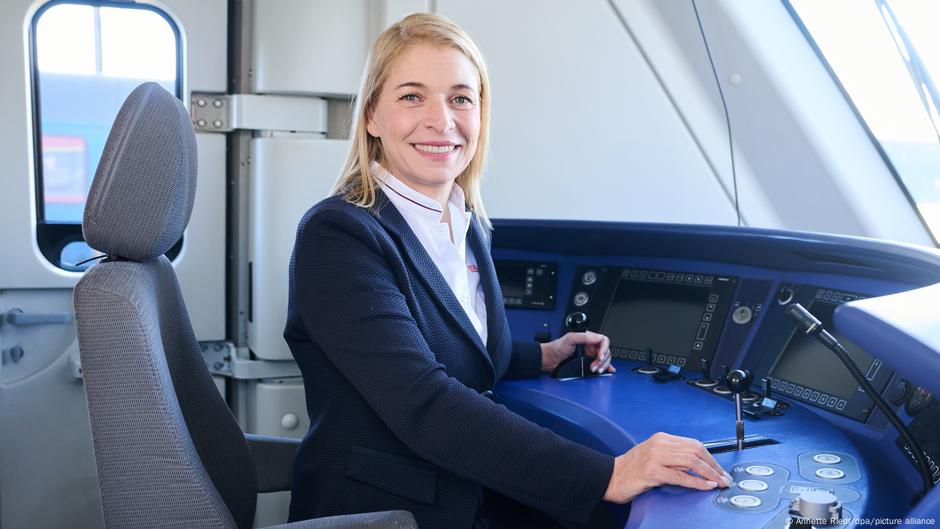
Deutsche Bahn has been struggling for quite some time, marked by extensive delays frequently lasting hours, missed connections, train service cancellations, and unclean stations. The issues extend to infrastructure, with damaged tracks and signal equipment resulting in continuous track maintenance. Furthermore, the quality of service on trains is lacking, and restroom facilities are unsanitary.
Now everything is supposed to get better. With a new boss, a realistic schedule, and a focus on passengers' expectations that trains run comfortably and reliably from A to B as scheduled.
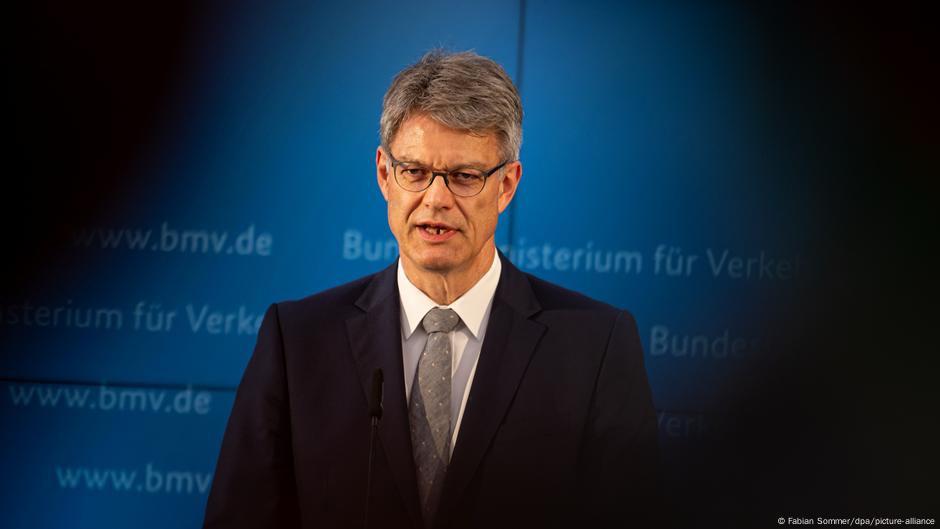
In Berlin on Monday, September 22, 2025, Transport Minister Patrick Schnieder, a member of the Chancellor's government, announced Evelyn Palla as his pick to lead Deutsche Bahn and outlined his strategy for enhancing Germany's rail system.
"Today marks the beginning of a new chapter, one where we will refocus on our core strength: operating trains and ensuring the railway remains the country's vital artery," Evelyn Palla, a 51-year-old Austrian citizen, stated to reporters in Berlin on Monday. She is toreplace the hapless railway boss Richard Lutz, who has led the government-run organization since 2017. Lutz had consistently cautioned about the railways' run-down condition, but for a considerable period, politicians largely ignored his alerts. A particularly noteworthy and frequently cited remark of his was: "We're handling three times the traffic volume compared to 1990, using essentially the same infrastructure."
Evelyn Palla joined the Deutsche Bahn executive team in 2019 and took over responsibility for regional transport in 2022, successfully reorganizing it. Indeed, local transport has recently become profitable and has seen an increase in ridership.
The labor representatives for Deutsche Bahn's 235,000 employees have voiced their gratitude for Palla's personal initiative in obtaining her locomotive driver's license last year. Palla stated that she wanted to experience being in the driver's seat firsthand and gain a deeper understanding of the daily tasks and core operations of their employees.
The lack of punctuality
In Berlin, Minister Schnieder started the press conference by criticizing the former Deutsche Bahn leadership, stating that their goal of having 75% to 80% of long-distance trains running punctually by 2027 was "nowhere near achievable." Schnieder announced a revised objective: starting in 2029, 70% of trains should be on schedule. This extended timeframe would allow the railway system more opportunity to upgrade its neglected tracks and signal boxes, some of which have been in disrepair for many years.
Schnieder's assertions are validated by the latest data: in the initial half of the year, only 63.4% of Germany's long-distance trains adhered to their schedules, with a further decline to 56.1% in July. To put it differently, more than 40% of long-distance trains experienced delays during the peak summer travel period. In contrast, neighboring Denmark and the Netherlands boast on-time performance of approximately 90% for their trains, while Switzerland achieves an impressive 99%.
The transport minister commented that a lot of people see the problems with the railway system as mirroring the problems with our government, a connection he called "extremely dangerous."
The German railway system extends for approximately 33,500 kilometers (20,800 miles). Deutsche Bahn, the state-run operator, relies on government funding, which some argue has been insufficient for infrastructure investment in recent decades.
Actually, certain railway lines, intersections, and even signal control rooms originate from the 1800s. Numerous systems are entirely dilapidated, practically irreparable, and currently so obsolete that they cannot be used for digitally managed train services, which are planned to be the norm.
Minister Schnieder pledged that the incoming railway administration would adhere to its strategy of fully upgrading approximately 40 key lines by the year 2036. The heavily usedthe link connecting Berlin, the capital city, and HamburgThe northern part of the nation is presently undergoing improvements. The project commenced in early August and is expected to finish next April, with an estimated price tag of €2.2 billion ($2.6 bn). This leads us to our next topic: finances.
Billions in investment
Last year alone, around 2,000 kilometers of tracks and 2,000 switches were replaced, work was carried out on around 150 bridges, and around 1,000 stations and stops were renovated. The total cost was around €16.4 billion. And the railways will receive many more billions of euros from the €500 billion special fund for infrastructure that the federal government intends to borrow in order to whip the country into shape over the coming years. Schnieder announced that he was still working on a piece of legislation to this effect, but that he intended to present figures in the fall showing exactly how much of the new windfall Deutsche Bahn would receive. This is because a large amount of money from the fund is also intended to accelerate the digitization of the country.
In August, Deutsche Bahn reported a loss of €760 million for the first half of the year. The company billed this as progress, as losses had been reduced by almost €1 billion compared to the previous year.
But even as the new railway officials in Berlin were answering questions from journalists, news was making the rounds that train service in the north of the country had been severely restricted due to an overhead line disruption. ICE trains between Hamburg and Berlin, Germany's largest and second-largest cities, which were already being rerouted and taking longer due to the aforementioned construction work, had been completely canceled.
This article was originally written in German.
While you're here: Every Tuesday, Best for youeditors round up what is happening in German politics and society. You can sign up here for the weekly email newsletter, Berlin Briefing.
Author: Jens Thurau
Thus the article DB's New Chief Aims to Fix German Rail Chaos
You are now reading the article DB's New Chief Aims to Fix German Rail Chaos with the link addresshttps://www.angkaraja.cfd/2025/10/dbs-new-chief-aims-to-fix-german-rail.html
0 Response to "DB's New Chief Aims to Fix German Rail Chaos"
Post a Comment